

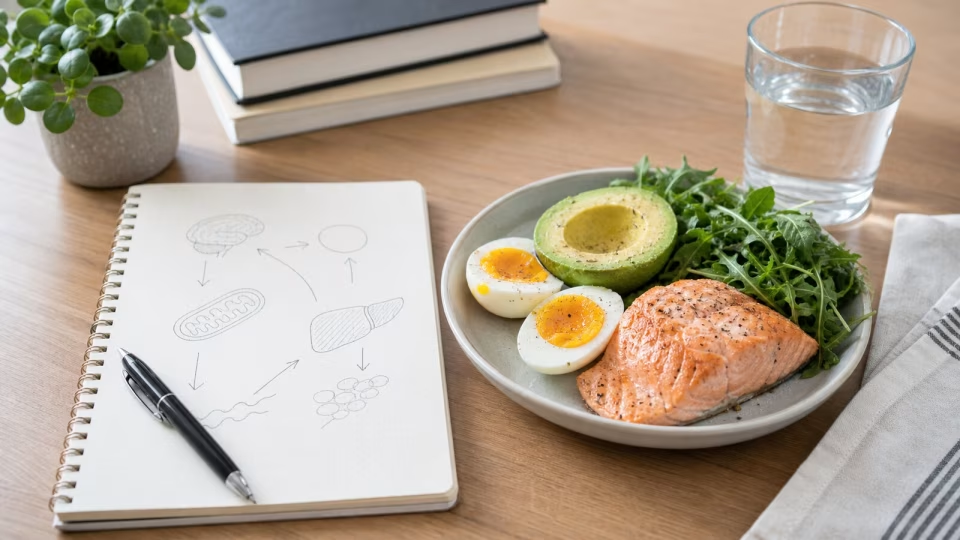
Keto does not magically melt fat.
The way I understand it now is simpler and less dramatic: keto changes the fuel environment. Lower carbs usually means lower glucose and lower insulin, which makes it easier for the body to access stored fat and produce ketones.
That still does not cancel calories. It just explains why keto can make fat loss feel more manageable for some of us.
Quick verdict
Short answer: Keto helps fat loss by lowering insulin, increasing access to stored fat, making ketones, and often reducing hunger enough to make a calorie deficit easier.
- What changes: fuel source and hunger signals.
- What does not change: energy balance still matters.
- My practical takeaway: ketosis is useful, but real meals and portions still count.
The first shift: lower carbs, lower insulin
When I lower carbs enough, my body has less incoming glucose to deal with. Insulin usually comes down too.
In broad terms, insulin is one of the main hormones involved in storing energy. When insulin is higher, fat cells are more pushed toward storing fat and less pushed toward releasing it. When insulin drops, the body has an easier time releasing stored fat from fat cells.
That release process is called lipolysis. Stored triglycerides break down into fatty acids and glycerol, and those fatty acids can be used for energy.
The second shift: the liver makes ketones
Once carb intake stays low, the liver starts turning more fat-derived fuel into ketones.
The simple version I use for myself: fatty acids get broken down into smaller fuel units. When the body is low on carbohydrate availability and the liver is handling a lot of fat-derived fuel, some of that fuel gets converted into ketone bodies like acetoacetate and beta-hydroxybutyrate.
Those ketones can circulate in the blood and be used by tissues like the brain, heart, and muscles. That is nutritional ketosis.
Why that can help with fat loss
- Lower insulin can make stored fat easier to access.
- Ketones give the body another fuel source.
- Protein and fat can make meals feel more satisfying.
- Stable blood sugar can mean fewer crash-driven cravings for some people.
- Eating fewer ultra-processed foods often lowers accidental calories.
That last part is huge for me. Keto worked better when it became real food instead of constant bars, fake desserts, and snack loopholes.
The calorie part still matters
This is where I had to stop being romantic about keto.
If I eat more energy than my body uses, keto does not magically erase it. Butter, cheese, nuts, cream, avocado, added oils, and keto snacks still contain calories. Keto may make it easier to eat less without feeling tortured, but it does not delete energy balance.
Key takeaway: Keto changes the fuel system, but fat loss still comes from using more energy than I take in over time.
That is why ketosis and portions both matter.
What keto does not do
- It does not turn my body into a fat-burning furnace that ignores calories.
- It does not mean unlimited dietary fat automatically becomes body-fat loss.
- It does not prevent normal plateaus or metabolic adaptation.
- It does not make sleep, stress, movement, and consistency irrelevant.
How I apply the science
I keep it practical:
My simple fat-loss checklist
- Keep carbs low enough that keto actually feels like keto for me.
- Eat real protein at meals instead of building the day out of fat snacks.
- Use fat for satiety, not as a goal to chase.
- Watch the calorie-dense foods that are easy to overdo.
- Judge progress by weeks, not one scale reading.
How I keep protein at the center
The practical version of the science is not “eat less fat and be miserable.” For me, it is meat and protein first, then enough fat to make the meal satisfying. That keeps keto from turning into coffee, cream, cheese, and random snacks.
A good plate feels different when protein is the anchor. Beef, eggs, chicken, fish, or another real protein gives the meal structure. Then cauliflower rice, avocado, vegetables, salt, and sauce can support it. That is the version of keto that makes the science useful in real life.
The bottom line
Keto helps fat loss because it changes the hormonal and fuel environment: lower insulin, more access to stored fat, ketone production, and often better hunger control.
But the fat still has to be burned. Keto makes that easier for me when it lowers cravings and helps me eat real meals without constant hunger.
Science version, plain English: ketosis is a tool. The boring system still does the work.
Leave a Reply
You must be logged in to post a comment.