

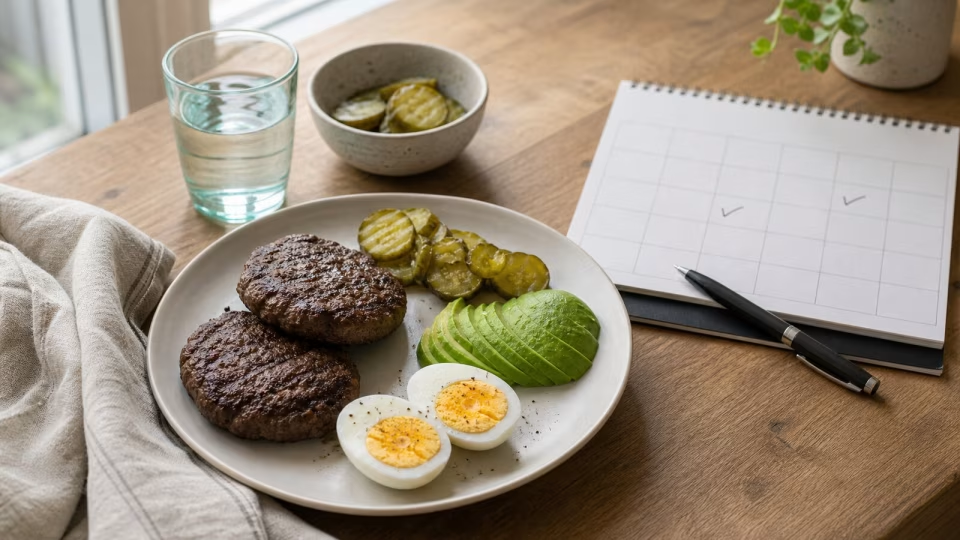
I used to love a clean restart.
New month. New plan. New rules. New motivation. A 30-day keto challenge used to sound perfect. It gave me a start line, an end line, and the feeling that I was finally going to get serious.
The problem was what happened after the challenge energy wore off.
I would be strict for a while, feel good, then hit stress, boredom, a social event, or one bad night. Then the old thought would show up: “I already messed this up. I will restart next month.”
That sentence cost me more progress than any single meal ever did.
The challenge mindset helped at first
I do not think short challenges are useless. A 30-day structure can help someone learn labels, clear out obvious sugar, build a few reliable meals, and prove that change is possible.
For me, the problem was that I started treating the challenge like the actual goal.
Finish the 30 days. Survive the rules. Get the win. Then relax.
But keto is not a school project I turn in at the end of the month. It has to survive normal Tuesdays, annoying shifts, family dinners, boring meals, plateaus, bad sleep, and the random night where I want to raid the kitchen.
Why I stopped doing them
The 30-day version made keto feel temporary. I was either on or off. Perfect or restarting. Crushing it or waiting for Monday.
That is not how real life works.
I needed habits, not another big event. I needed food I could repeat, a reset I could use the next meal, and a weekly check-in that did not turn one bad night into a new identity crisis.
I did not need more intensity. I needed more repeatability.
The system that replaced challenges
Instead of a 30-day challenge, I now use a boring weekly check-in:
- Did I eat real food most days?
- Did I build meals around protein instead of snacks?
- Did I drink water and salt my food?
- Did sleep and late caffeine get out of control?
- Did sweeteners or keto treats wake up cravings?
- Did I move at all?
- What is one fix for next week?
That last question matters. One fix. Not a whole personality replacement.
My new restart rule
I do not restart next month anymore. I restart next meal.
If I slip at dinner, breakfast can be normal. If Saturday goes sideways, Sunday does not need to become a ceremony. If a holiday gets messy, the next plate can be protein first and boring in a good way.
This is the same reset idea I keep coming back to: keto is a direction, not a fragile object.
What I stopped doing
- Waiting for the first of the month to start over.
- Building rules so strict that I eventually rebel against them.
- Using one slip as proof that I need a full restart.
- Buying a pile of keto products to make the challenge feel official.
- Treating motivation like the main fuel source.
When a challenge might still help
I am not anti-challenge for everyone. If a 30-day structure helps someone learn the basics and build confidence, that is fine.
I just think the exit plan matters more than the challenge itself. What happens on day 31? What happens after the first slip? What happens when work gets hard or dinner gets boring?
If the answer is “restart the next challenge,” I already know where that road leads.
The bottom line
I stopped doing 30-day keto challenges because I do not want keto to depend on countdowns anymore.
Real food. Water. Electrolytes. Sleep. Walking. Fewer loopholes. One weekly check-in. One next meal.
That is less exciting than a challenge. It is also the reason I keep showing up after the excitement is gone.
Related reading
- What Sustainable Keto Actually Looks Like for Me Now
- When Keto Gets Boring: How I Keep Showing Up Anyway
- I Fell Off Keto. Here Is How I Get Back Without Starting Over
- What I Eat After a Bad Keto Day
- Keto Plateau: Why the Scale Stopped and the Boring System That Got It Moving Again
- The Keto Snack Problem: Why Snacking Kept Me Hungry
Leave a Reply
You must be logged in to post a comment.