
Keto cravings at night were one of the first patterns that made me realize willpower was not the whole answer. I could eat well all day and still end up in the kitchen later if dinner, stress, sleep, or routine were off.
First, I had to admit the pattern
My night cravings were not random. They usually followed one of a few patterns:
- I ate too light during the day and tried to “be good” until my body pushed back.
- I watched TV or scrolled my phone in the same place where I used to snack.
- I stayed up too late and my decision-making got worse.
- I was stressed and wanted food to change my mood.
- I kept old trigger foods around and pretended I would suddenly be a different person around them.
- I was thirsty, low on normal salty food, or just generally sloppy with hydration.
Seeing the pattern helped. It made the craving feel less like a character flaw and more like a problem I could troubleshoot, the same way I troubleshoot a keto reset.
The snack loop usually started earlier
One thing I had to admit: a lot of my night cravings started during the day.
If I grazed on keto snacks, skipped a real meal, or kept reaching for little bites instead of eating properly, I was basically keeping the food-noise engine running. By night, the craving felt like it came out of nowhere, but I had been feeding the loop for hours.
That is why the snack issue matters so much for me. I wrote more about that in The Keto Snack Problem and How Food Noise Got Quieter When I Stopped Grazing.
The biggest fix: a real dinner
This was the least exciting answer and probably the most useful one.
When I tried to make dinner too small, I almost always paid for it later. My body did not care that I was trying to be disciplined. It just knew I was not satisfied.
Now I try to make dinner simple and filling: protein, fat, and a low-carb side that actually feels like a meal. Not a tiny plate, not a snack pretending to be dinner. A real dinner. The same idea is why I wrote about real food keto instead of coffee, cheese, and fake meals.
That does not mean eating until stuffed. It means not going into the most tempting part of the day already underfed.
My “kitchen closed” routine
I needed a clear signal that eating was done for the night. Not because eating after a certain time is magically bad, but because my habit brain needed a line.
After dinner, I clean up the kitchen, put food away, make tomorrow easier if I can, and brush my teeth. That little routine helps me stop negotiating with myself.
If I leave the kitchen messy and snacks visible, I basically leave the argument open for later.
The 10-minute rule
When a craving hits, I wait 10 minutes before deciding anything.
During those 10 minutes I do something else: drink water, make tea, take a short walk, shower, read, stretch, or get away from the kitchen. The point is not to pretend the craving is not there. The point is to give it time to peak and fade before I obey it.
A lot of cravings do pass. Not all of them, but enough that the delay is worth it.
The salt and water check
Before I decide I need food at night, I try to check the boring stuff first.
Did I drink mostly coffee today? Did I salt my meals? Did I sweat, work late, or go too long without water? If the answer is yes, I start with water and salt, or an electrolyte drink that does not turn into a sweet treat.
This does not magically erase every craving, but it has saved me from mistaking a sloppy hydration day for real hunger more than once. That same lesson is why keto electrolytes became one of my basic checks instead of an afterthought.
If I am actually hungry, I eat something boring
This rule helped me separate hunger from snack hunting.
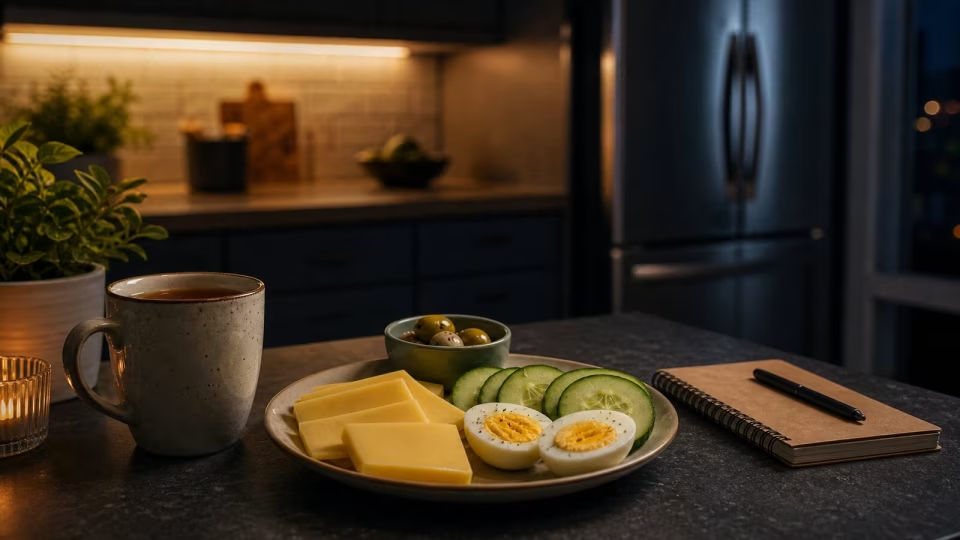
If I am truly hungry, a simple keto food sounds acceptable. Leftover chicken, eggs, tuna, meat, cheese, a small salad, something plain and real. If the only thing that sounds good is crunchy, sweet, or hyper-specific, I am probably chasing a craving more than solving hunger.
That does not mean I never eat at night. It means I try not to let night eating become a free-for-all.
Sleep matters more than I wanted to admit
When I stay up too late, I get hungrier, moodier, and worse at making decisions. That is not just in my head. Sleep loss can affect appetite, cravings, judgment, and how hard food decisions feel.
So one of my best craving tools is not a snack. It is going to bed before the second wave of hunger shows up. When sleep, caffeine, and phone habits are the bigger problem, I treat it like the routine issue I described in Bad Sleep, Work Stress, and Coffee Made Keto Feel Much Harder.
I do not always nail it, but when I protect sleep, keto gets easier. When I fight sleep with screens and snacks, keto gets louder.
If I already raided the kitchen, I do not make it worse
This part matters because the second decision is usually more important than the first one.
If I eat something I did not plan, I try not to turn it into a whole-night event. I stop, drink water, close the kitchen, and make the next meal normal keto food. No punishment, no dramatic restart, no waiting for Monday.
That is the same reset mindset I use after a rough keto day: stop the slide early and make the next plate boring in a good way. I wrote the exact approach in What I Eat After a Bad Keto Day.
What I stopped doing
- I stopped saving too many calories for night and acting surprised when I got hungry.
- I stopped keeping my biggest trigger foods where I could see them.
- I stopped treating every craving like an emergency.
- I stopped assuming a keto-labeled treat was harmless for me personally.
- I stopped turning one snack into “the whole night is ruined.”
That last one is huge. If I eat something I did not plan, I try to stop there. The second mistake is usually the one where I decide the first mistake gave me permission to quit caring.
My simple night craving checklist
- Did I eat enough real food today?
- Did dinner have enough protein and fat to feel satisfying?
- Am I thirsty or just restless?
- Am I tired enough that sleep would solve more than food would?
- Am I sitting in the same place where I usually snack?
- If I am actually hungry, would plain real food sound good?
That checklist does not make cravings disappear forever. It just gives me a system when my brain is trying to negotiate with the refrigerator.
The bottom line
Night cravings are not always a willpower problem. For me, they are usually a routine problem, a sleep problem, a stress problem, an under-eating problem, or an environment problem.
When I eat a real dinner, close the kitchen, wait 10 minutes, choose boring food if I am truly hungry, and go to bed earlier, I raid the kitchen a lot less often.
Not perfect. Better. That is enough to keep going.
Related reading
- The Keto Snack Problem: Why Snacking Kept Me Hungry
- How Food Noise Got Quieter When I Stopped Grazing
- Keto Electrolytes: What Actually Worked for Me – Salt, Potassium, Magnesium, and Water
- What I Eat After a Bad Keto Day
- Bad Sleep, Work Stress, and Coffee Made Keto Feel Much Harder
- I Fell Off Keto. Here Is How I Get Back Without Starting Over
Leave a Reply
You must be logged in to post a comment.