

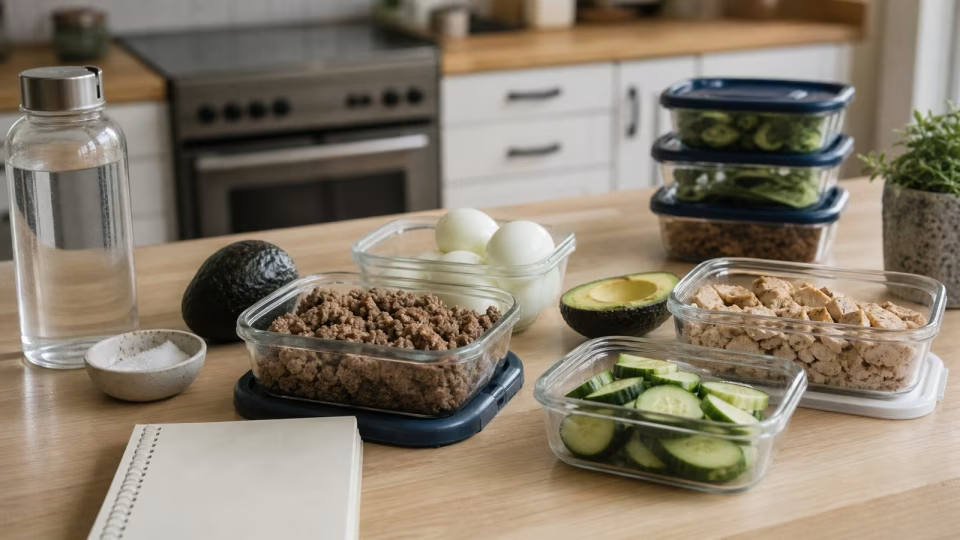
Busy weeks are where keto decision fatigue shows up the most for me.
It is not that I suddenly forget what works. I know what works: real meals, enough protein, water, salt, and a backup plan. The problem is that a busy week asks too many food questions at the worst possible time.
What am I eating? Did I thaw anything? Do I have time to cook? Is there food at work? Should I stop somewhere? Am I actually hungry or just tired and overwhelmed? Every single one of those questions drains me when I am already running on empty.
I do much worse when every meal starts from zero. I do better when the week has defaults already in place.
My rule: decide before I am tired
If I wait until the end of a long day to make every food decision, I usually make worse ones. That is not a lack of discipline. It is a bad system.
The goal is not to become more heroic at 8 p.m. The goal is to remove as many 8 p.m. decisions as possible.
On better weeks, I already know the answer to dinner before I need dinner. It might be ground beef and eggs. It might be chicken thighs and cucumber. It might be a couple of prepared egg bites or a frittata. Not exciting. Already decided.
I keep fewer choices on purpose
Too many keto options used to make me feel prepared. In reality, they made me stand in my own kitchen like a confused shopper.
Now I keep the busy-week list much smaller:
- One cooked protein ready.
- One fast protein option.
- One simple low-carb side.
- One emergency food.
- One fallback order if I have to eat out.
That is enough. I do not need twelve recipes. I need a repeatable answer when my brain is fried.
The busy-week food formula
My easiest formula is simple: protein, a low-effort side, and enough salt and water so keto does not feel harder than it needs to.
This usually looks like:
- Ground beef, eggs, and pickles.
- Chicken thighs, avocado, and cucumber.
- Burger patties, lettuce, cheese, and mustard.
- Tuna or sardines with avocado.
- Leftover meat over greens.
- Two or three prepared egg bites or frittatas when I have zero energy.
I am not trying to impress anyone with these meals. I am trying to make the next good choice obvious.
What I stopped deciding every single day
One of the biggest upgrades was deciding what I no longer need to decide:
- I do not debate whether a keto bar counts as lunch. It does not for me.
- I do not negotiate whether coffee can replace real food all day. It cannot.
- I do not turn one bad meal into “the whole week is ruined.”
- I do not start complicated recipes on my most exhausted nights.
- I do not rebuild my entire plan every time the week gets messy.
Boring removes arguments. That is the whole point.
The two-minute reset I use when the week gets away from me
Sometimes the plan still falls apart. When it does, I try not to turn it into a dramatic speech.
I just ask three quick questions:
- What is the next real protein I can eat?
- Have I had water and salt, or only coffee?
- What is the easiest normal keto meal after this?
That is it. I do not need a new challenge or a punishment fast. I need the next boring meal.
Why I keep emergency food boring
My emergency food cannot be too fun. If it feels like a treat, it turns into snack mode fast. That is why my backups stay plain: tuna packets, sardines, pork rinds sometimes, hard-boiled eggs if they are cold, and electrolytes without sugar.
The bottom line
Keto decision fatigue got better when I stopped treating every meal like a fresh negotiation.
Busy weeks need defaults. One cooked protein. One fast protein. One simple side. One emergency food. One fallback order. That system keeps showing up for me when the week gets messy.
The fewer decisions I leave for tired me, the better keto works.
Related reading
- Simple Keto Meal Prep for Busy Weeks That Actually Gets Used
- Keto on Crazy Work Days: The System That Still Works
- Real Food Keto: Meat, Eggs, Avocado, and No More Fake Meals
- What I Eat After a Bad Keto Day
- The Keto Snack Problem: Why Snacking Kept Me Hungry
- What Sustainable Keto Actually Looks Like for Me Now
Leave a Reply
You must be logged in to post a comment.