

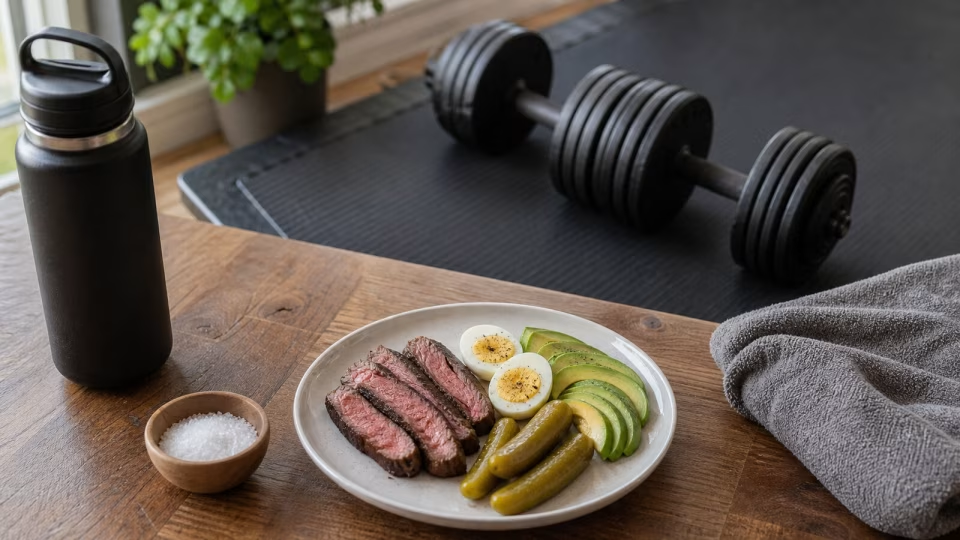
My workouts got weird before they got better.
The first time I tried lifting weights on keto, I thought something was seriously wrong. My energy felt flat. Warmups felt heavier than they should. I wanted to blame keto immediately.
Looking back, I was doing the usual beginner thing: not enough water, not enough salt, not enough real food, too much coffee, and too much ego in the gym.
I did not need to quit lifting. I needed to stop pretending my body had adapted overnight.
The adaptation period is real
Early keto can make workouts feel rough. Some of that is normal transition. Some of it is poor planning.
For me, the biggest problems were electrolytes, sleep, and under-eating. I had to accept that the first few weeks were not the time to test my pride. I lowered the intensity a little, kept moving, and let the routine stabilize.
That matches the bigger pattern I keep seeing: keto works better when I stop adding five hard things at the same time.
Protein mattered more than keto snacks
If I want to lift, I cannot build my day around coffee, cheese grazing, and a random bar.
I do better when meals have real protein: eggs, beef, chicken, salmon, steak, tuna, or whatever simple protein is available. I am not trying to turn this into a bodybuilding plan. I am just trying to give my body enough building material to train and recover.
Two lifting days a week is currently a good mental baseline for me. I do not need the perfect program before I can start. I need repeatable training that I can actually recover from.
Electrolytes showed up again
Every keto topic somehow comes back to water and salt.
If I lift while undersalted, dehydrated, and over-caffeinated, the workout feels worse. That does not mean keto is broken. It means I ignored the basics.
For me, the boring fix is salted real food, water, and paying attention to potassium and magnesium through food first. If I am sweating a lot, I take that seriously.
The muscle part matters more than the scale
The longer I do keto, the less I want the gym to be only about burning off food. I care more about keeping muscle, moving better, and not letting weight loss turn into feeling smaller and weaker.
That does not mean I need a complicated program. It means I need real protein, enough total food, basic progressive strength work, and recovery that is not wrecked by bad sleep and late caffeine.
The scale can move while strength feels weird, especially during adaptation. That is why I pay attention to more than weight: how the warmups feel, whether I can repeat the workout, whether my sleep is holding up, and whether I am eating like someone who expects to recover.
What actually helped my lifting
- Real meals before training days, with protein, salt, and enough total food.
- Lowering ego during adaptation.
- Walking on non-lifting days.
- Consistent basics instead of punishment workouts after a slip.
- Protecting sleep and controlling late caffeine.
The bottom line
Lifting weights on keto got better when I stopped treating the gym like a test I had to pass during adaptation.
Enough real food. Enough protein. Water. Salt. Sleep. Reasonable progression. Less ego.
That is not flashy, but it is how I kept lifting without crashing.
Related reading
- Keto Electrolytes: What Actually Worked for Me – Salt, Potassium, Magnesium, and Water
- Bad Sleep, Work Stress, and Coffee Made Keto Feel Much Harder
- Keto Plateau: Why the Scale Stopped and the Boring System That Got It Moving Again
- Real Food Keto: Meat, Eggs, Avocado, and No More Fake Meals
- Keto on Crazy Work Days: The System That Still Works
- Keto and Mood: What Happened to My Mental Clarity After the First 90 Days
Leave a Reply
You must be logged in to post a comment.