

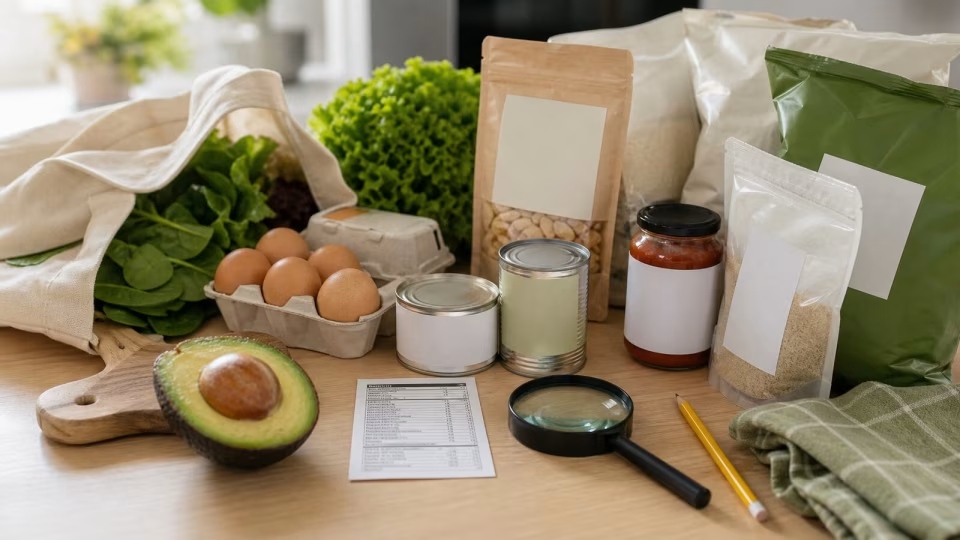
Hidden carb traps still got me after I cut the obvious bread, pasta, fries, and dessert. The annoying part was that I thought I was being strict, but sauces, labels, and tiny serving-size tricks were quietly changing the day.
The trap was not always the main food
The burger patty was not the problem. The eggs were not the problem. The chicken was not always the problem.
The problem was usually what came with it.
- ketchup
- barbecue sauce
- sweet salad dressing
- marinades and glazes
- seasoning blends with sugar or starch
- “low-carb” snacks that were not as low-carb as I wanted them to be
- coffee add-ins that turned a simple drink into dessert
That was annoying to admit because it sounded so small. But small things add up fast when I repeat them every day.
Sauces were my first obvious hidden-carb trap
I used to focus on the food and forget the sauce.
No bun? Good. No fries? Good. But then I would leave ketchup, barbecue sauce, sweet dressing, or some mystery restaurant sauce on the order and act like it did not count.
It counted.
CDC specifically calls out condiments and sauces as everyday foods that can hide added sugars, including ketchup, barbecue sauce, and salad dressings. That was exactly my problem. They taste savory, so my brain did not file them under “sweet.”
Now I assume sauce is suspicious until I know what is in it. That does not mean I never use sauce. It just means I do not let sauce be invisible anymore.
“Sugar-free” did not always mean safe for keto
This one got me because the front of the package sounds so confident.
Sugar-free. Zero sugar. No added sugar. Keto friendly. Low carb.
Those words can be useful, but I do not trust them by themselves anymore. The FDA definition of “sugar free” allows less than 0.5 grams of sugar per serving. That can still matter if the serving size is tiny or if I eat multiple servings. And “sugar-free” does not automatically mean carb-free, calorie-free, craving-free, or good for my keto routine.
Some sugar-free products use sugar alcohols. Some use high-intensity sweeteners. Some use fillers. Some are technically low in sugar but still have enough total carbohydrate to matter for me. I break down the ones I personally watch in Artificial vs Natural Sweeteners on Keto and keep a faster version in the sweetener reference table.
The front of the package sells me the idea. The back of the package tells me the truth.
Serving size math humbled me
This is where I had to stop pretending.
If a label says 2 grams of carbs per serving, that sounds easy. But if the package has 4 servings and I eat half the bag without thinking, I did not eat 2 grams. I ate the math I ignored.
The American Diabetes Association recommends starting with total carbohydrate on the Nutrition Facts label, because total carbohydrate includes sugar, starch, and fiber. That helped me simplify the process. Before I argue with net carbs, fiber math, or marketing claims, I look at the actual serving size and total carbs first.
My rule now: if I cannot be honest about the serving size, I do not treat the label like a win.
Keto-branded snacks were not automatically my friend
I wanted keto snacks to solve everything.
Keto cookies. Keto bars. Keto chocolate. Keto cereal. Keto ice cream. Keto everything.
Some of them can fit. I am not saying they are all bad. But for me, they can keep the dessert habit alive. Even when the carbs look reasonable, the sweet taste can make me want more sweet things later. Sometimes the label is fine but the behavior it triggers is not fine.
That is why I try to ask two questions now:
- Does this actually fit my carb target?
- Does this make my cravings quieter or louder?
The second question matters just as much as the first one.
My 30-second hidden-carb checklist
This is the little system I use now when a product or restaurant order looks keto but I am not sure.
- Check the serving size first.
- Look at total carbohydrate before trusting the marketing claim.
- Look for added sugar and obvious sugar names.
- Watch for words ending in “-ose,” like dextrose, glucose, maltose, fructose, and sucrose.
- Watch for syrups, honey, agave, molasses, and juice.
- Watch for maltodextrin, starch, flour, and fillers in powders or seasoning blends.
- Check whether sugar alcohols are present, and which ones.
- Ask whether this food makes keto easier tomorrow or harder tonight.
That last one is not scientific. It is just honest.
What I do now
I keep it boring most of the time.
- I order meat, eggs, or simple protein first.
- I remove the obvious carbs.
- I ask for sauces on the side when I am not sure.
- I use mustard, mayo, butter, oil, or simple dressings more often than sweet sauces.
- I treat sugar-free candy and keto desserts like occasional experiments, not daily food.
- I read labels even when the front of the package is screaming “keto.”
None of this is glamorous. But glamorous is not what saves me on a random Tuesday when I am tired and hungry. A boring system does.
The bottom line
Hidden carbs are not usually a willpower problem. For me, they are usually a label-reading problem, a serving-size problem, a sauce problem, or a “this sweet thing keeps me wanting sweet things” problem.
Once I stopped treating hidden carbs like tiny details, keto got easier. Not perfect. Easier.
And that is the whole point of Ketostruggle for me: find the thing that keeps biting me, update the system, and keep going.
Related reading
- Artificial vs Natural Sweeteners on Keto: What I Actually Use Now
- Keto Sweeteners and Additives: A Quick Reference Table
- Eating Out on Keto Without Making It Weird
- The Keto Foods I Stopped Buying
- Keto Bloating, Fiber, and Sugar-Free Candy: What I Learned the Hard Way
- How Food Noise Got Quieter When I Stopped Grazing
Leave a Reply
You must be logged in to post a comment.