

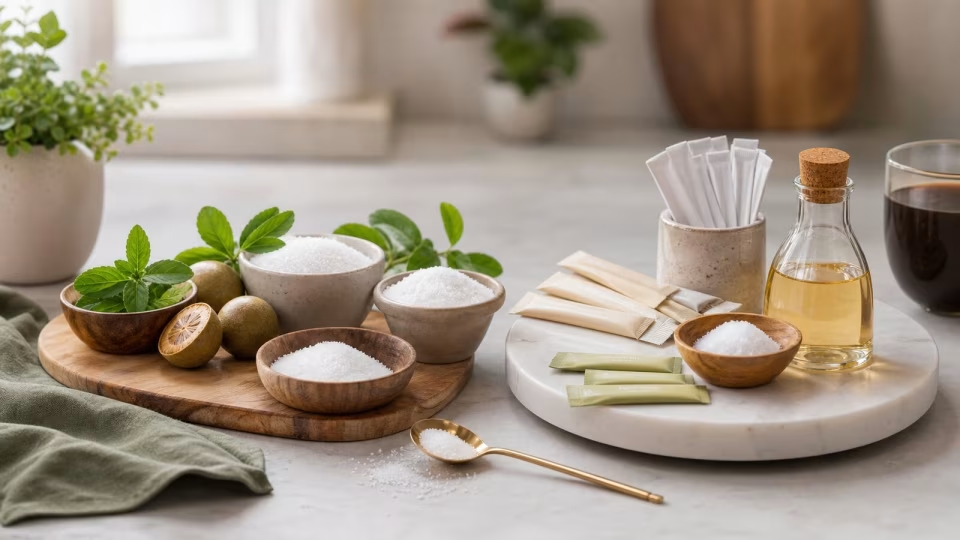
Sweeteners on keto confused me for a long time because I kept asking the wrong question. I wanted to know whether a sweetener was natural or artificial, but the better keto question is whether it helps me stay consistent or keeps cravings loud.
I stopped thinking “natural vs artificial” was the whole question
I still care about ingredients. I still prefer simple foods most of the time. But for keto, “natural” does not automatically mean useful, and “artificial” does not automatically mean it will ruin everything.
Honey is natural. Maple syrup is natural. Agave is natural. They still do not fit the way I want to eat when I am trying to stay keto.
On the other side, some high-intensity sweeteners add little to no calories and generally do not raise blood sugar by themselves, according to FDA. But the packet, powder, drink mix, dessert, or candy they come in can still have other ingredients that matter.
So my real question is not just “is this natural?”
My real question is: does this help me stay on track, or does it keep the sweet loop alive?
The sweeteners I am most comfortable with
For me, the most useful sweeteners are the boring ones that do not make me want to eat the whole kitchen afterward.
Allulose
Allulose is one of the more interesting ones because it is a rare sugar that the FDA treats differently from traditional sugar on Nutrition Facts labels. FDA guidance allows allulose to be excluded from Total Sugars and Added Sugars, and manufacturers may use 0.4 calories per gram for calorie calculations.
In real life, I like it because it tastes more like sugar than many alternatives. I still do not want it to become a daily dessert habit, but it is one of the sweeteners I feel better about using when I actually need something sweet.
Erythritol
Erythritol is a sugar alcohol. Compared with some other sugar alcohols, it tends to have a very low blood-glucose impact for many people, and the American Diabetes Association notes that erythritol may not increase blood glucose.
I do not treat that as permission to eat unlimited keto sweets. Too much sugar alcohol can still bother digestion, and sweet taste can still keep cravings loud for me. But if I need a bulk sweetener, erythritol is one of the ones I am more willing to use.
Monk fruit and stevia
Pure monk fruit and stevia can be useful because they are very sweet in tiny amounts. FDA has not questioned certain GRAS notices for high-purity steviol glycosides and monk fruit extracts under their intended uses.
The catch is the blend. A lot of “monk fruit” or “stevia” products are not just monk fruit or stevia. They may be blended with erythritol, allulose, dextrose, maltodextrin, or other fillers. That does not automatically make them bad, but it means I need to read the ingredient list instead of trusting the front label.
The ones that still trip me up
Maltitol
Maltitol is the big one I watch for in sugar-free candy and chocolate.
It is a sugar alcohol, but that does not mean it acts like erythritol for me. Human research has shown maltitol can produce glycemic and insulin responses, and in real life it is one of the ingredients I see most often in “sugar-free” sweets that do not feel worth it.
My personal rule is simple: if maltitol is high on the ingredient list, I usually skip it.
Maltodextrin and dextrose
These are the sneaky label words I watch for in powders, drink mixes, seasoning blends, and sweetener packets.
Dextrose is glucose. Maltodextrin is a fast-digesting carbohydrate used in a lot of processed foods. If I am trying to keep carbs low, those are not ingredients I want to ignore just because the front says “zero sugar.”
Big bowls of “keto dessert”
This is not one ingredient. This is my behavior.
I can make something fit the label and still make keto harder. If a keto dessert keeps me thinking about dessert all night, I have to be honest about that. Sometimes the best choice is not finding the perfect sweetener. Sometimes the best choice is not feeding the sweet habit that day.
What I use now
Most of the time, I keep it boring.
- Coffee with cream instead of sweet coffee most days.
- Allulose when I want something that behaves more like sugar in a recipe.
- Erythritol or monk fruit blends occasionally, if the label is clean enough for me.
- Stevia sparingly, because too much tastes weird to me.
- No maltitol-heavy candy as a normal habit.
- No trusting “sugar-free” until I read the ingredients and total carbs.
That is not a universal rule. It is just what works better for me.
My sweetener checklist
- Is it actually carb-free, or just sugar-free?
- What is the serving size?
- Are there sugar alcohols, and which ones?
- Does it contain maltitol, maltodextrin, dextrose, starch, or syrup?
- Does it make cravings quieter or louder?
- Would I still want this if I were not chasing dessert?
If I cannot answer those questions honestly, I slow down. When I need the fast grocery-aisle version instead of the full explanation, I use my keto sweeteners and additives quick reference table.
The bottom line
I do not think keto sweeteners are automatically good or bad. I think they are tools.
Some tools help. Some tools keep me stuck. Some are fine on paper but bad for my cravings. Some are only a problem because of the fillers in the product, not because of the sweetener itself.
For me, the winning move is not finding a loophole for unlimited sweets. The winning move is making keto easier to repeat tomorrow.
Related reading
- Keto Sweeteners and Additives: A Quick Reference Table
- The Hidden Carb Traps That Still Got Me (Even When I Thought I Was Strict)
- Keto Cravings at Night: What Helped Me Stop Raiding the Kitchen
- Keto Bloating, Fiber, and Sugar-Free Candy: What I Learned the Hard Way
- How Food Noise Got Quieter When I Stopped Grazing
- Almond Flour vs Coconut Flour on Keto: What Actually Worked for Me
Leave a Reply
You must be logged in to post a comment.