

The quick answer
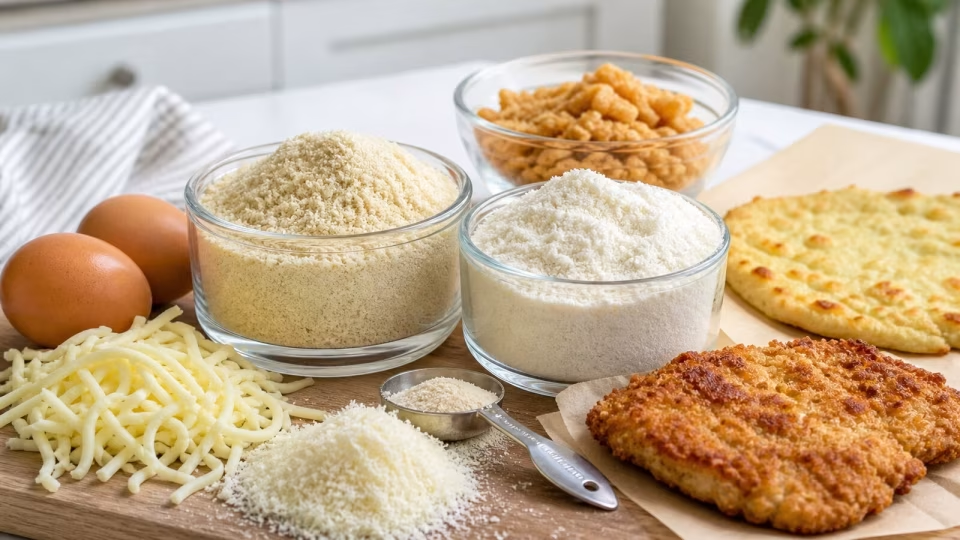
Almond flour vs coconut flour on keto comes down to this for me: almond flour is the forgiving one, coconut flour is the powerful weird one, and both work when I measure them like I mean it.
I have used both for baking, pizza dough, pretzel-style dough, and fried chicken. I have mixed them together. I have added mozzarella, Parmesan, pork rinds, xanthan gum, psyllium husk, and even cauliflower when the recipe required.
For me, the problem was not bloating or some huge disaster. It was accuracy. Measure it, keep it fresh, adjust the moisture, and remember coconut flour tastes like coconut.
Keto flours are not magic. They are tools. Useful tools, but still tools.
Regular flour is the old problem
Regular all-purpose wheat flour works because of gluten and starch. It stretches. It rises. It browns. It acts like the flour I grew up thinking of as normal flour.
It also brings a lot of carbs. That is why I do not treat it like a little harmless ingredient when I am trying to stay keto. I avoid it at all costs.
Almond flour and coconut flour are different tools. They can make great food, but they do not copy wheat flour perfectly. Once I accepted that, the food got better.
| Flour | What I expect | What I watch |
|---|---|---|
| Wheat flour | Stretch, chew, rise, traditional baking | Too many carbs for my keto plan |
| Almond flour | Moist, rich, good for baking and dough | Freshness, nut allergy, texture |
| Coconut flour | Absorbent, high-fiber, great coating | Needs liquid/eggs, coconut flavor, easy to overuse |
Labels vary by brand, so I do not memorize one perfect number. I check the package. I look at total carbs, fiber, and net carbs for the amount I actually use, not just the cute serving size on the label. That matters with keto flour because serving size can trick me if I stop paying attention. Flours usually have similar macros between the brands, but it’s still important to check the label.
Almond flour is easier for me
Almond flour is the one I find more forgiving.
It works in cookies, muffins, crusts, pizza dough, pretzel-style dough, and those keto recipes where mozzarella and cauliflower are added to the almond flour to do most of the work. It has a mild nutty flavor, and it does not soak up liquid like coconut flour does.
I like super-fine blanched almond flour better than rough almond meal when I want a smoother texture. For a crust or coating, I can be more flexible. For baking, finer usually behaves better.
The thing I watch with almond flour is freshness. It has fat in it. Fat can go stale. If it smells off, tastes bitter, or has been sitting around forever, I do not try to save it with more seasoning. I replace it.
I also remember that almond flour is not calorie-free magic. It is keto-friendly for me, but it is dense. A whole tray of almond-flour baked stuff can still slow me down if I act like keto means unlimited.
Coconut flour is powerful, not casual
Coconut flour is the one I respect the most.
It is dry. It is absorbent. It can take over a recipe fast. A little coconut flour can thicken and bind. Too much can turn food dry and heavy.
I love the coconut flavor, so that part does not bother me. But I have to be honest: coconut flour tastes like coconut. If someone hates that flavor, they should not pretend it disappears in every recipe.
For baking, coconut flour usually needs more moisture. More eggs, more liquid, more fat, or a recipe built for coconut flour from the start. I do not swap it cup-for-cup with wheat flour or almond flour and expect a normal result.
Coconut flour is cheaper sometimes because I use less of it, but it still needs measuring. Eyeballing coconut flour is how a good idea turns into a dry brick.
Fried chicken with coconut flour is one of my favorite keto wins
This is where coconut flour really worked for me.
Chicken with coconut flour, or a coconut flour and almond flour mix, is one of the best keto swaps I have made. It gives me that breaded-chicken feeling without regular flour.
My basic system is simple:
- Pat the chicken dry.
- Season the chicken and the flour, not just one of them.
- Use coconut flour alone or a coconut flour and almond flour mix.
- Dip in egg so the coating has something to grab.
- Press the coating on instead of gently hoping it sticks.
- Cook at a steady moderate heat so the outside does not burn before the chicken is done.
- Rest it on a rack instead of trapping steam under it.
The rack matters. If I put crispy chicken on a flat plate right away, the bottom can get soft. A rack keeps air moving and helps the coating stay better. Sometimes I like to put my chicken on a piece of thick paper to let the paper absorb excess oil. You can do whatever works best for you.
Pork rinds also work great for crunch. They are good as a snack too, but crushed pork rinds as a coating are serious keto kitchen material. Parmesan helps too, especially when I want salty, crispy edges. I still pay attention to how often I use these extras because keto is not simply “no carbs forever.” Calories and habits still matter.
Pizza dough is where blends make sense
Keto pizza dough is not regular pizza dough. Once I stopped expecting that, I liked it more.
Almond flour with mozzarella is the classic keto move for a reason. The cheese gives stretch and chew that almond flour does not have by itself. I used that kind of dough for pretzel-style keto stuff too, and it worked.
Cauliflower helps in pizza dough too. I think of riced cauliflower more like a base or bulk ingredient than a true flour, but it can make a crust feel lighter and less like one giant block of cheese and almonds.
The big rule with cauliflower is water. If it is too wet, the crust suffers. You can squeeze it dry, you can try to microwave it to release some of its water and squeeze the water out of it again. Same boring lesson: moisture matters.
Xanthan gum and psyllium husk are real helpers
Almond flour and coconut flour do not have gluten. That is why keto baking can get crumbly or weak if the recipe has no binder.
Xanthan gum helps with structure. I use it carefully because a little goes a long way. Too much can make things gummy, and gummy is not the goal.
Psyllium husk helps too, especially when I want more bread-like chew. It can hold moisture and give low-carb dough more structure. Again, measuring matters. Psyllium is not something I dump in like seasoning. Psyllium husk may cause bloating for some people, so I keep that in mind. For me, it works best as a measured helper, not something I throw into everything.
Eggs are still one of the main binders. Parmesan can help. Mozzarella can help. Pork rinds can help for coating. The trick is choosing the binder for the job instead of throwing every keto ingredient into one bowl and hoping.
My keto flour rules now
- I measure coconut flour carefully.
- I check almond flour for freshness.
- I use recipes designed for keto flours when I can.
- I do not expect almond flour or coconut flour to act like wheat flour.
- I adjust moisture based on the other ingredients.
- I use coconut flour when I want absorbency or a light coating.
- I use almond flour when I want forgiving texture and richer dough.
- I use xanthan gum or psyllium when the recipe needs structure.
- I use pork rinds or Parmesan when I want crunch.
The bottom line
Almond flour and coconut flour made keto feel more normal for me because I could still bake, fry chicken, make pizza dough, and play with recipes.
But they are not regular flour. Almond flour is easier. Coconut flour is stronger. Blends can be better than either one alone. Xanthan gum, psyllium husk, eggs, mozzarella, Parmesan, cauliflower, and pork rinds all have a place when I use them for the right reason.
The boring system is the same as always: measure, check labels, keep ingredients fresh, adjust moisture, and do not turn keto baked goods into the whole diet.
Meat, eggs, avocado, real meals first. Keto flour is a tool. A very useful tool, but still a tool.
Related reading
- Keto Bloating, Fiber, and Sugar-Free Candy: What I Learned the Hard Way
- Artificial vs Natural Sweeteners on Keto: What I Actually Use Now
- Keto Sweeteners and Additives: A Quick Reference Table
- Real Food Keto: Meat, Eggs, Avocado, and No More Fake Meals
- The Keto Foods I Stopped Buying
- The Hidden Carb Traps That Still Got Me (Even When I Thought I Was Strict)
Leave a Reply
You must be logged in to post a comment.